


Last reviewed September 9 2026
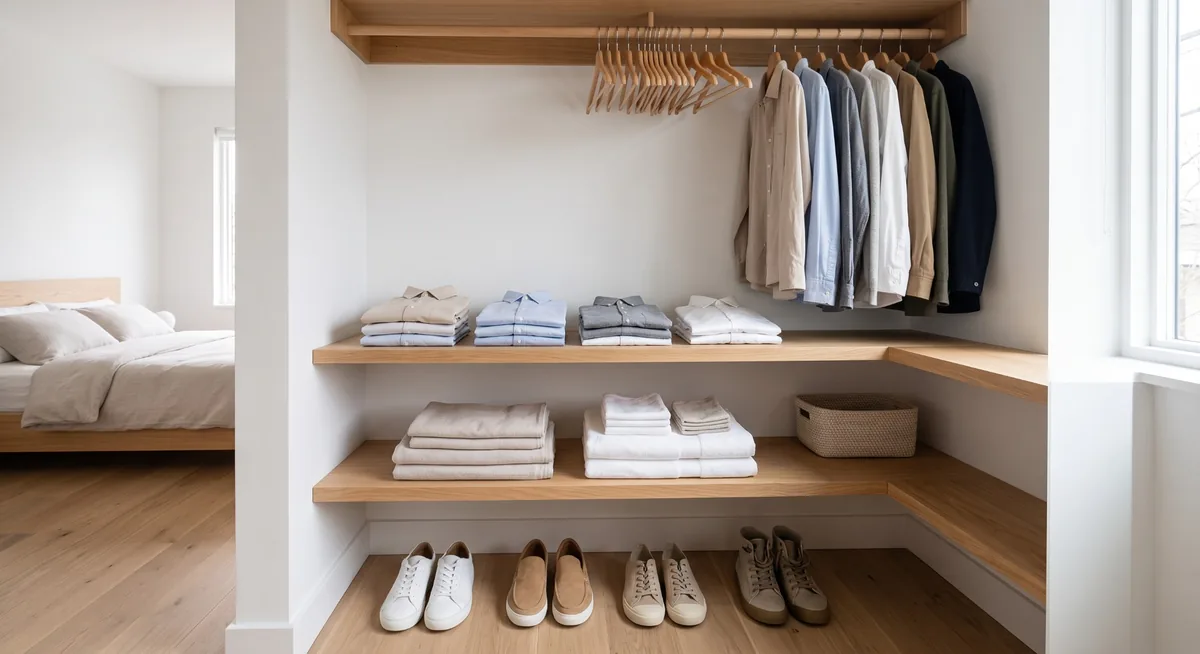
Quick answer: Most closet shelves are 12 to 16 inches deep (30.5 to 40.6 cm). Start with 12 inches for shoes and compact folded clothing, 14 inches for general clothing storage, and 16 inches for linens or measured bins. Use a deeper shelf only when the item, door opening, and reach, and support system all allow it.
Measurement note: Shelf depth is the horizontal distance from the finished back wall to the front edge of the shelf. It is different from the closet’s overall depth, the shelf’s width and the vertical space between shelves.
Closet Shelf Depth at a Glance
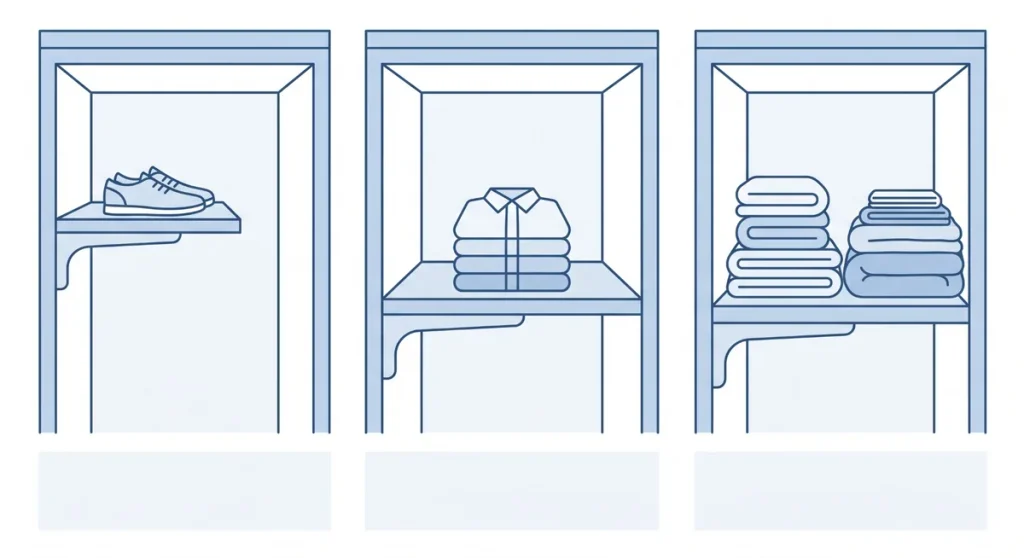
| Storage type | Planning depth | Best use |
| Folded shirts and light clothing | 12 to 14 in (30.5 to 35.6 cm) | Visible single stacks |
| Jeans and bulky sweaters | 14 to 16 in (35.6 to 40.6 cm) | Larger folded items |
| Flat shoe shelves | About 12 in (30.5 cm) | Most everyday shoes |
| Angled shoe shelves | About 14 in (35.6 cm) | Shoes with a front retaining lip |
| Towels and linens | 14 to 16 in (35.6 to 40.6 cm) | Towels sheets and bedding |
| Shelf above a closet rod | 12 or 16 in (30.5 or 40.6 cm) | Use the selected system specification |
| Top shelf with medium bins | 14 to 16 in (35.6 to 40.6 cm) | Seasonal clothes and accessories |
| Oversized bins or bulky bedding | 18 to 20 in (45.7 to 50.8 cm) | Special use with clear access |
These are planning ranges, not universal building-code dimensions. Choose the shallowest shelf that fully supports the intended item and remains easy to see, load and reach.
Why 12 14 and 16 Inch Shelves Are Common
Manufactured closet systems cluster around this range. According to the ClosetMaid wire shelving specifications, Shelf and Rod shelving is available in 10, 12, and 16 inch depths, while SuperSlide and Linen shelving are offered in 12 and 16 inch depths. The same specifications show 12, 16, and 20 inch brackets for compatible systems.
Rubbermaid’s expandable closet kit is 13.25 inches deep and is designed for closets at least 14 inches deep. Meanwhile, Elfa ventilated wire shelves are available in several depths. Together, these products help explain why 12, 14, and 16 inches are useful planning points, but they do not establish one universal shelf standard.
Shelf Depth for Folded Clothes

Most folded shirts, pants, and lightweight sweaters fit well on shelves 12 to 14 inches deep. Keeping a single stack visible is usually more practical than creating two rows that hide clothing at the back. If thick sweaters or sweatshirts overhang a 14 inch shelf, consider moving to 16 inches or changing the way the items are folded.
Extra depth will not solve a vertical stacking problem. When clothing stacks become too tall to remove comfortably, reduce the vertical spacing or add another shelf instead.
Shoe Shelf Depth
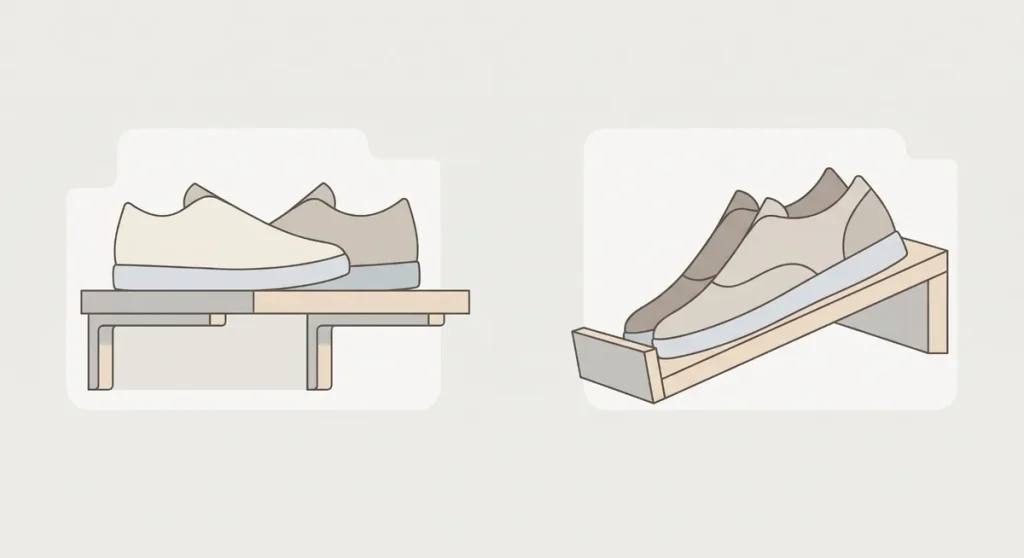
A flat shoe shelf around 12 inches deep works for many everyday shoes. An angled shelf may need about 14 inches when a front lip or fence is included. Large athletic shoes, work boots and extended sizes can project beyond these ranges, so measure the longest pair from heel to toe before buying shelving.
A small amount of toe overhang may be acceptable when the heel remains supported and the shoes do not interfere with doors, clothing or the walking route. For boots, adjustable vertical spacing often matters more than extra shelf depth.
Linen Shelf Depth
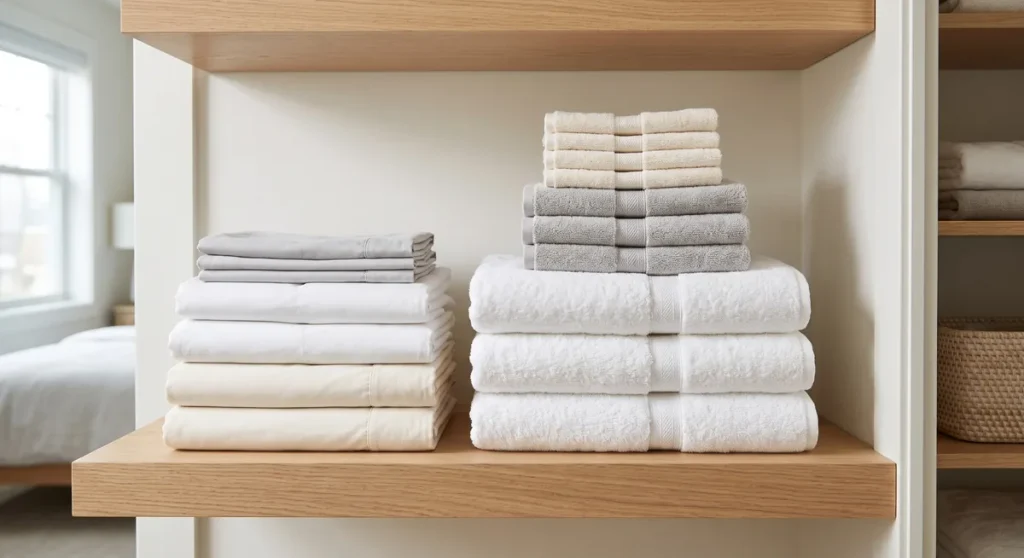
Plan on 14 to 16 inches for towels, sheets, and folded bedding. Hand towels, pillowcases, and narrow hall closets often work well at the shallower end of that range. Bath towels, thicker blankets, and measured storage baskets may benefit from a 16 inch shelf.
Avoid making the shelf so deep that several rows develop. Once items at the back disappear from view, labeled bins, a pull-out component, or a shallower shelf usually provides better access.
Storage Bins and Top Shelves
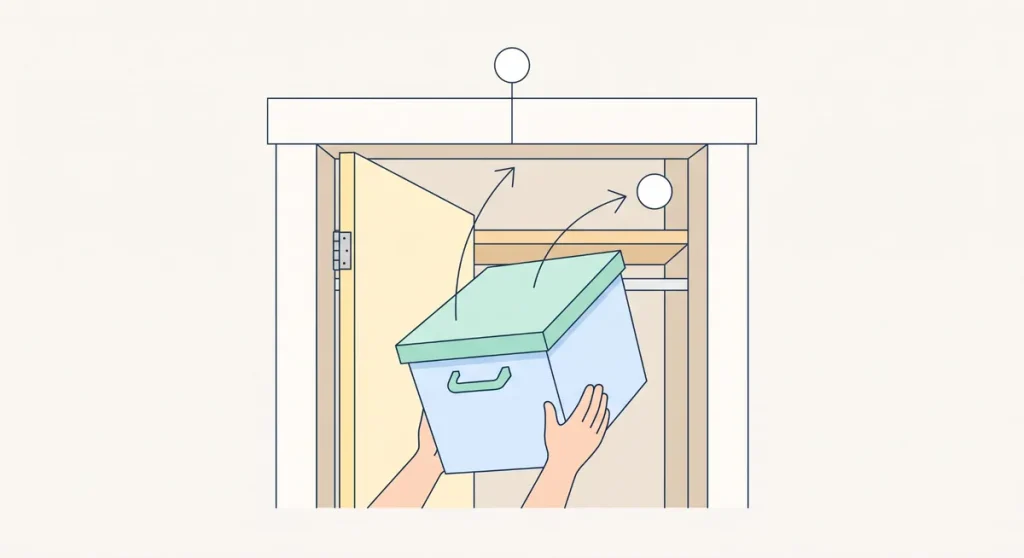
Choose the shelf depth from the bin’s outside dimensions, including its lid and handles. Capacity labels alone do not show the container’s actual front-to-back size.
For a top shelf, consider more than the available space behind the doors. The container must pass through the opening, clear the header, and still be lifted safely into position. Sliding doors may also keep part of the opening covered even when the closet itself is deep.
- Bin size: Measure the widest outside points with the lid attached.
- Opening clearance: Make sure the container can pass through the closet opening.
- Lifting space: Test the required angle before installing the shelf.
- Weight placement: Store heavy items on lower shelves and keep lightweight items overhead.
An extra-deep 20 inch shelf may hold a large container, but the added capacity is not useful if the bin cannot clear the header or be reached safely.
Shelf Depth Above a Closet Rod
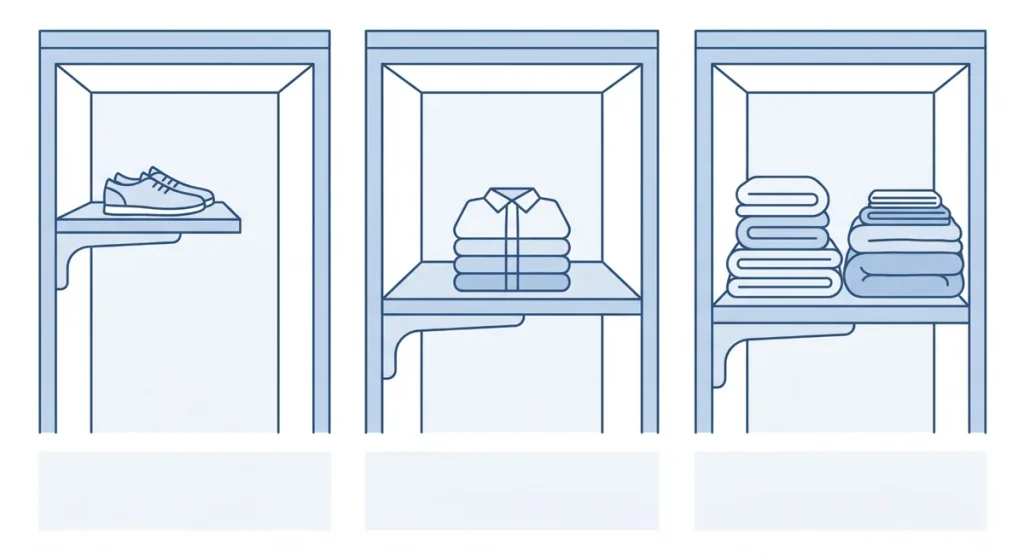
Shelves above closet rods commonly use 12 or 16 inch components. The best choice depends on the complete shelf-and-rod system rather than storage capacity alone. Increasing shelf depth can change the front support position and may also interfere with hanger movement. A shelf pairs best with the right closet rod height for the clothes below.
For example, the ClosetMaid wire shelving specifications call for a 12 inch bracket with its 16 inch Shelf and Rod installation. This is a product-specific requirement rather than a universal bracket rule, so always follow the diagram for the exact shelving, brackets, track, and anchors being installed.
Reach-In Closet Shelf Depth
A reach-in closet usually works well with a shelf depth of 12 to 14 inches. This range supports folded clothing and shoes without pushing storage too far into the opening. When hinged or bifold doors open widely and the header does not restrict access, a 16-inch shelf may also work. These numbers assume a standard closet depth of 24 inches.
Overall closet depth should not determine shelf depth by itself. Even a 24-inch-deep closet does not require a 24-inch shelf, because the two measurements solve different design problems. Check the door arrangement and available access before selecting the final shelf size. Treat shelves as part of planning reach-in closet dimensions, not an afterthought.
Walk-In Closet Shelf Depth
Walk-in closets can accommodate 14- to 16-inch shelves more easily because users approach the storage from inside the room. Reserve 18- or 20-inch shelves for specific oversized items that have already been measured, and make sure the remaining aisle stays comfortable.
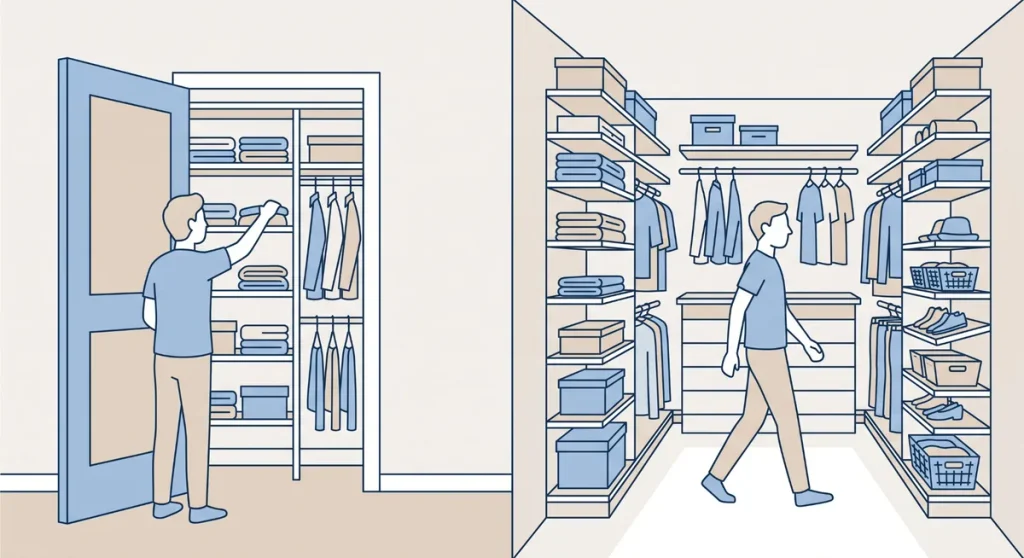
Before ordering components, calculate the clear aisle width. Subtract shelf depth from each applicable wall, then account for drawers, cabinet doors, and baskets in their fully open positions. With shelves facing each other, every additional inch of shelf depth removes two inches from the aisle.
How to Measure for Closet Shelves
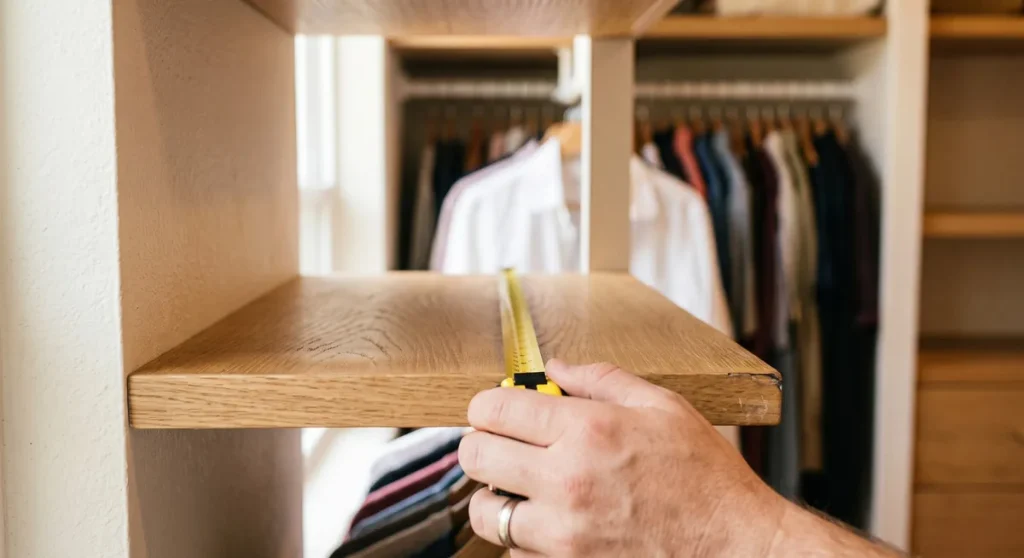
1. Measure from the finished back wall toward the opening at the top, middle and bottom. Use the smallest measurement and note trim, outlets, vents and baseboards.
2. Open every door fully. For sliding doors, record how much of the opening remains covered. For a top shelf, measure the door header separately.
3. Fold representative clothes and measure the largest stack. Measure the longest shoe and the deepest bin with its lid and handles attached.
4. Mark the proposed shelf edge with painter’s tape. Move a box through the opening and walk through the remaining aisle before committing.
5. Check shelf material, thickness, unsupported span, brackets, tracks, anchors and the published load rating for the complete system.
Preventing Shelf Sag
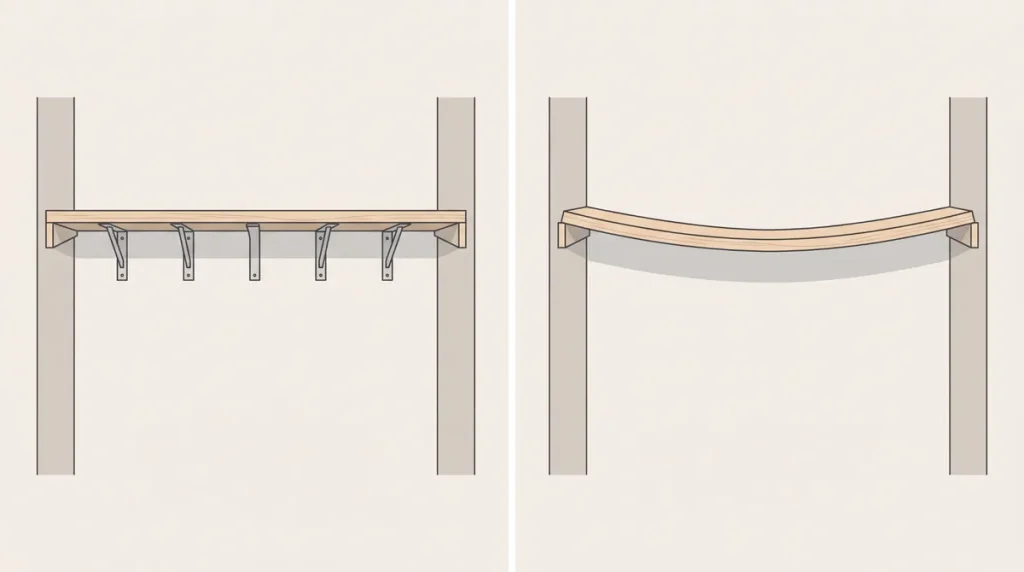
Shelf depth alone does not determine strength. Material, thickness, unsupported span, load, and attachment method all affect how a shelf performs. The Architectural Woodwork Institute shelf span calculator evaluates factors such as load, deflection, material stiffness, thickness, and span separately rather than treating depth as the only variable.
ClosetMaid’s wire-shelving instructions specify standards no more than 24 inches apart for its adjustable system and front supports no more than 36 inches apart for certain fixed-mount installations. Those measurements apply to the named system and should not be transferred automatically to unrelated wood, laminate, floating, or wire shelving.
- Follow the manufacturer’s support layout and load rating.
- Reduce unsupported span when the shelf will hold heavy items.
- Add an approved center support or vertical divider when required.
- Use anchors and framing suitable for the wall and expected load.
- Avoid placing a concentrated heavy load at the center of a long shelf.
Planning for Easier Reach

Keep frequently used items where the intended user can see and retrieve them comfortably. Shallower shelves often improve access because stored objects stay closer to the front edge.
The U.S. Access Board reach guidance identifies a 15- to 48-inch unobstructed reach range for covered operable parts and reduces the permitted high reach when someone must reach over a deep obstruction. These dimensions are useful design references, but they are not a universal requirement for every residential closet shelf.
- Place daily clothing on shallow shelves within comfortable reach.
- Keep lightweight occasional items higher and heavy items lower.
- Use pull-out baskets or drawers when deep lower storage is unavoidable.
- Provide clear floor space in front of the sections used most often.
- Check applicable accessibility requirements for regulated projects.
Common Closet Shelf Depth Mistakes
- Choosing the deepest shelf that fits: A hidden back row is storage that will be forgotten.
- Measuring the closet but not the opening: A shelf or bin can fit behind the wall yet fail to pass through the door.
- Buying bins first: Capacity names do not replace outside measurements of the lid and handles.
- Using one depth everywhere: Shoes, folded sweaters, linens, and large bins have different requirements.
- Ignoring hangers and hardware: A deeper shelf can block hanger movement or require a different support layout.
- Treating bracket spacing as universal: Follow the instructions for the exact material and system.
Practical Recommendation
For general folded clothing, a 14-inch closet shelf is a practical starting point. Where space, door clearance, or visibility is limited, reduce the depth to 12 inches. Linens, bulky sweaters, and measured storage bins may justify moving up to 16 inches.
Reserve 18- or 20-inch shelves for specific oversized items after checking the closet opening, reach, aisle clearance, and support system. In most cases, the best shelf is the shallowest one that fully supports the intended item while remaining easy to use.
Frequently Asked Questions
What Is the Standard Depth of a Closet Shelf?
Most closet shelves are 12 to 16 inches deep. Use 12 inches for compact storage and many shoes, 14 inches for general folded clothing, and 16 inches for linens or measured bins.
Is a 12-Inch Shelf Deep Enough for Folded Clothes?
Yes. A 12-inch shelf supports many folded shirts, pants and lightweight sweaters. Measure bulky garments first, because they may sit better on a 14- or 16-inch shelf.
How Deep Should a Top Closet Shelf Be?
A top shelf is usually 12 to 16 inches deep. Choose it around the intended bin and confirm that the container can clear the door header and pass through the opening.
How Deep Should Linen Closet Shelves Be?
Fourteen to 16 inches works well for many towels, sheets and folded blankets. Measure storage baskets before choosing the final depth.
Should a Closet Shelf Match the Closet Depth
Usually not. A 24-inch-deep closet does not require a 24-inch shelf. Most clothing and shoe storage remains easier to see and reach on shelves between 12 and 16 inches deep.
Sources and Research Method
Home Size Lab reviewed current U.S. search results for closet shelf depth on September 9, 2026, then checked recurring recommendations against manufacturer specifications, product dimensions, an industry shelf-span tool and federal accessibility guidance. Measurements in this article are planning ranges. Installation and load requirements must come from the manufacturer of the selected system.

3 Comments
Pingback: Reach-In Closet Dimensions: Depth, Width & Layout
Pingback: Closet Rod Height: Single, Double & Accessible
Pingback: Standard Closet Depth: Minimum & Ideal Sizes