


Last reviewed: September 2026
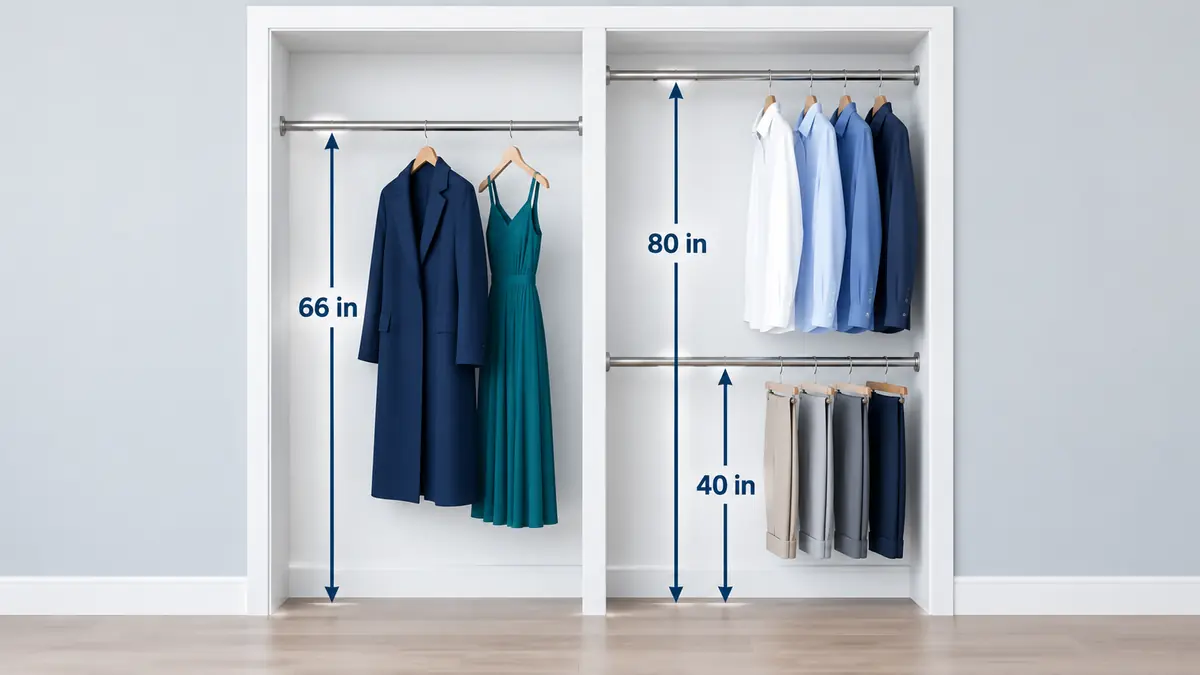
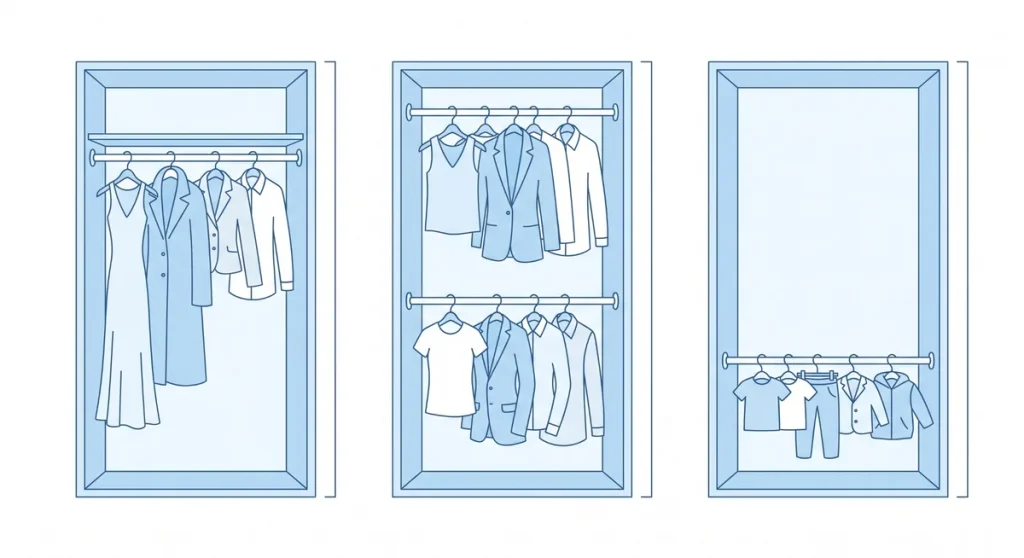
For a single adult closet rod, mount it at 66 inches (168 cm) above the finished floor, measured to the rod’s centerline. For double hang, use 40 and 80 inches (102 and 203 cm). These starting points suit most wardrobes. Fine-tune them for garment length, the user’s reach, shelf clearance, and your hardware.
Measurement note: Unless stated otherwise, every height in this guide is measured vertically from the finished floor to the centerline of the installed rod. Some instructions measure to the rod’s top or bottom, so confirm the reference point before drilling.
Closet Rod Heights at a Glance
| Closet setup | Practical starting height | Best suited to | What to verify |
|---|---|---|---|
| Single adult rod | 66 in. (168 cm) | Mixed wardrobes and long-hang sections | Longest garment, user reach, floor or shelf below |
| Double rod, lower | 40 in. (102 cm) | Shirts, blouses, folded pants, short skirts | Garment hems clear the floor |
| Double rod, upper | 80 in. (203 cm) | A second short-hang row | User can reach hangers; upper garments clear lower rod |
| Coat closet | About 66 in. (168 cm) | Jackets and most coats | Raise only if long coats need it and users can still reach |
| Child or flexible closet | About 30–48 in. (76–122 cm) | Child-accessible daily clothing | Set for the actual child and make the system adjustable |
| Accessible fixed rod | Up to 48 in. (122 cm) for an unobstructed adult reach | Daily-use accessible storage | Approach, obstruction depth, clear floor space, applicable rules |
Most current U.S. planning guides land on about 66 inches for single hang and 40/80 inches for double hang, though a few measure from a different reference point or use 40½ and 81¾ inches. Compare the guidance from Taskrabbit, Angi, and Bob Vila. Treat these as practical conventions, not a single required height for every residential closet.
What “Closet Rod Height” Should Mean
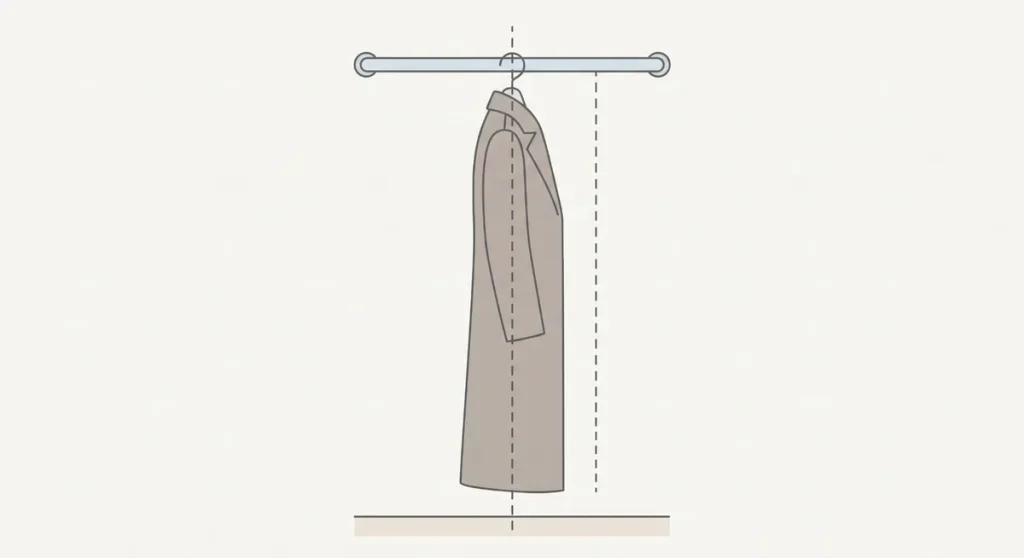
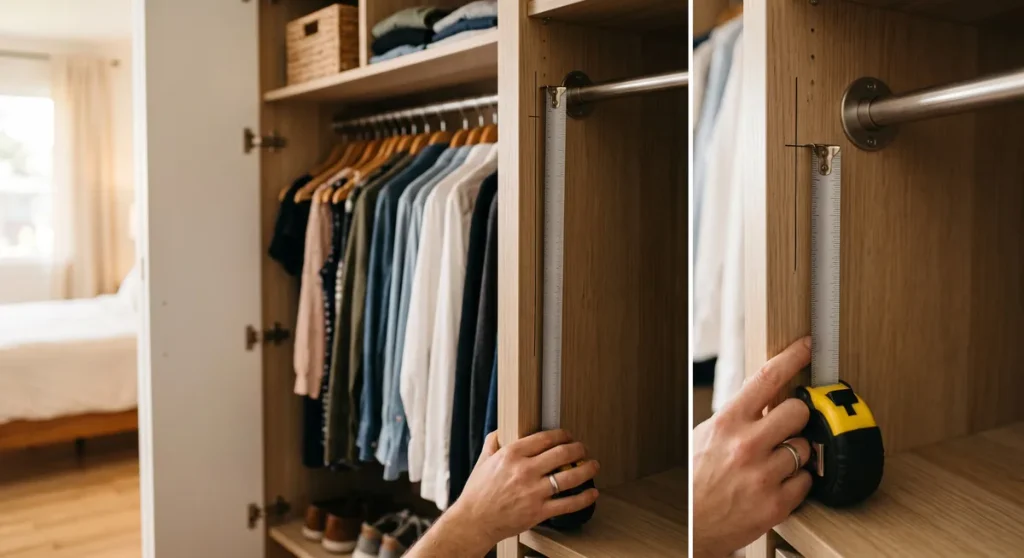
A rod is round, so a bracket can sit above or below the mark you make on the wall. One person measuring 66 inches to the rod’s bottom and another measuring to its center end up with different results. That is why the reference point matters.
Use one reference throughout the project:
- Measure from the finished floor, not an unfinished subfloor.
- Mark the rod centerline on both side walls or panels.
- Check the rod cup or bracket to see how its screw holes relate to that centerline.
- Use the same reference when calculating the shelf above and storage below.
If the flooring goes in later, add its finished thickness to the layout now, or the final floor-to-rod measurement will come up short.
Standard Single Closet Rod Height
For a single adult rod, start at 66 inches (168 cm) to the centerline. That leaves a tall hanging zone for coats, dresses, suits, robes, and pants hung by the cuff, and most adults can still reach the hangers comfortably.
But 66 inches is not right for every person or wardrobe. A shorter user may prefer the rod lower. Floor-length dresses may need more drop. And a shirts-only closet wastes the space under one high rod. Use the number as a starting point, then check it against the actual clothes and the actual user.
Choose Single Hang When the Wardrobe Includes Long Items
A single rod is usually the better choice when the section must hold:
- Full-length dresses
- Long coats or trench coats
- Robes
- Pants hung from the cuff
- Garment bags
- Mixed clothing with unpredictable lengths
Before you commit to a height, hang the longest item on its usual hanger and measure from the rod’s centerline to the garment hem. Add the clearance you want over the floor, drawer unit, shoe shelf, or whatever sits below.
Single-Rod Calculation
Use this planning formula:
Rod centerline height = longest hanging drop + desired bottom clearance
For example, if the longest garment drops 58 inches from the rod centerline and you want 4 inches of open space below it, the rod should be at least 62 inches high. The familiar 66-inch height still works if it stays comfortable to reach.
That calculation beats copying a standard, because it answers to your clothes and your reach.
Double Closet Rod Height
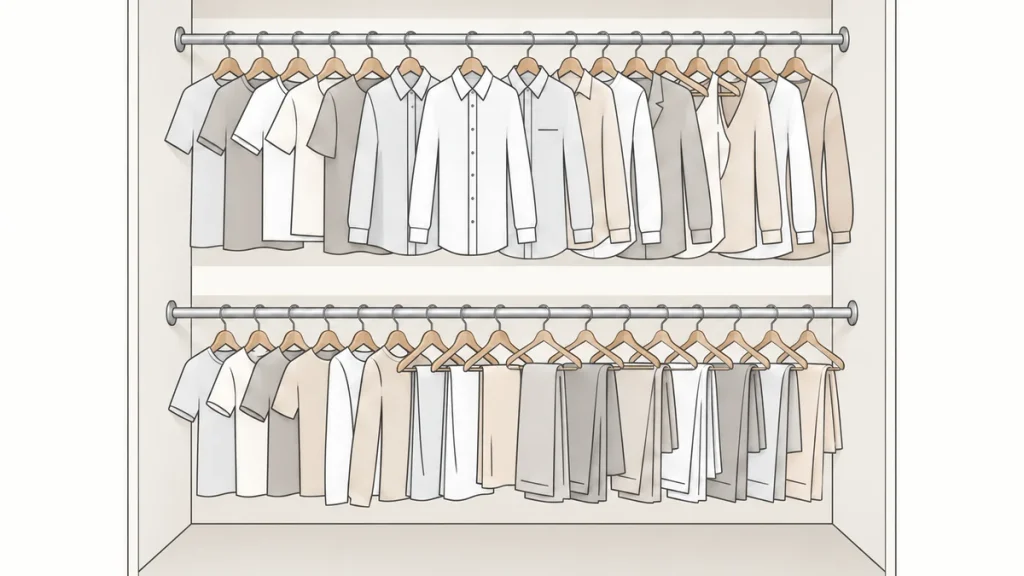
For a typical double-hang closet, begin with the lower rod at 40 inches (102 cm) and the upper rod at 80 inches (203 cm). That roughly 40-inch gap between the rods fits shirts, blouses, folded pants, and most other short-hang clothing.
Some guides use roughly 40½ inches and 81¾ inches instead. The small difference matters less than measuring the same way every time and testing the longest item in each row before you drill.
Why 40 and 80 Inches Often Work
Two rods give you two short-hang zones instead of one tall, half-empty space. When most of your clothes are short enough, double hang can nearly double your hanging capacity.
Skip double hang wherever either row would hold long jackets, untucked long shirts, maxi skirts, dresses, or coats. They drape over the lower rod, bunch up, or drag on the floor.
Calculate Double-Hang Heights From the Clothes
Measure the longest item planned for each row, then use two checks:
- Lower rod height: Lower-row garment drop plus desired floor clearance.
- Rod-to-rod distance: Upper-row garment drop plus a small no-contact buffer.
If the lower row’s longest garment needs 38 inches and you want 2 inches of clearance below it, a 40-inch lower rod is reasonable. But if the upper row’s garments drop 42 inches, a 40-inch separation is too tight. Widen the gap or move those garments to a single-hang bay.
Don’t push the upper rod higher just to squeeze in more storage unless the intended user can comfortably place and remove a hanger. An 80-inch rod suits one household and frustrates another.
Coat Closet Rod Height
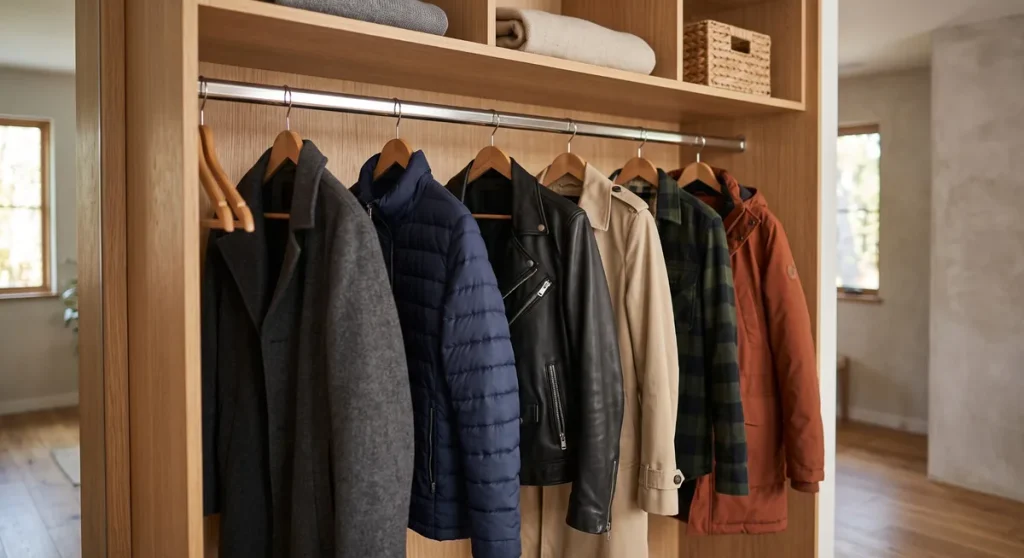
Start the coat closet rod at about 66 inches (168 cm). That fits most everyday jackets and coats, with room left for a shelf above and footwear below. For the full width, depth, and layout numbers, see our coat closet dimensions guide.
For long overcoats, trench coats, or garment bags, test the longest item before locking in 66. A 66 to 70-inch (168 to 178 cm) height gives more drop, as reflected in Taskrabbit’s current planning guidance, but only if everyone using the closet can still reach the hanger hook.
Bulky outerwear also needs enough closet depth and front clearance. Raising the rod won’t stop shoulders from brushing the back wall or the door from pressing against sleeves. Treat rod height, rod setback, usable depth, and door operation as separate checks.
Closet Rod Height for Accessible Storage
For an accessible setup, work from the user’s actual reach and approach. Forget the conventional 66-inch adult height.
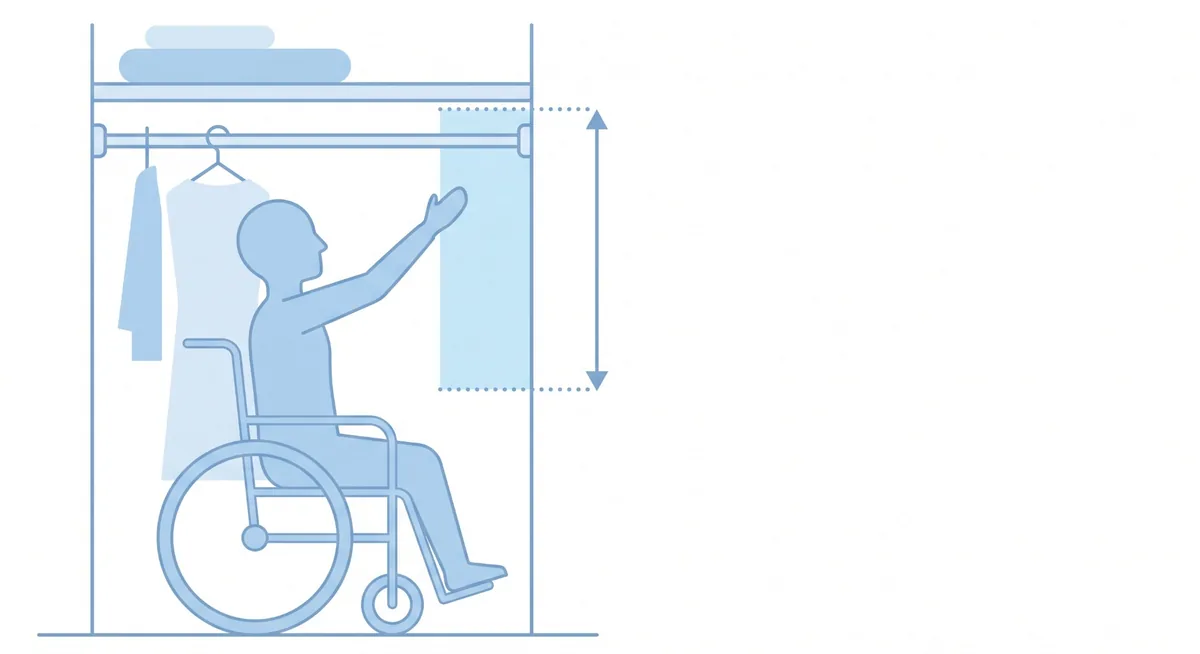
The 2010 ADA Standards identify closets and clothes rods as types of storage. Where the standards require storage in an accessible space to comply, at least one of each provided storage type must meet the applicable storage and reach provisions.
This does not mean every closet in every private home is automatically governed by the ADA. Project type, housing rules, state or local codes, and jurisdiction matter.
For adult reach ranges, the U.S. Access Board’s Section 308 guidance sets:
- Unobstructed forward or side reach: 15-48 inches (38-122 cm) above the finished floor.
- Forward reach over an obstruction deeper than 20 inches: High reach limited to 44 inches (112 cm), with other dimensional conditions.
- Side reach over an obstruction deeper than 10 inches and up to 24 inches: High reach limited to 46 inches (117 cm) when the specified obstruction conditions are met.
For home planning, keep a daily-use fixed rod at or below 48 inches (122 cm) when the approach is unobstructed, then test it with the intended user. A shelf, cabinet, deep closet return, door, or other obstruction can reduce the usable high reach.
Also consider:
- Clear floor space at the accessible bay
- Door opening and handle position
- Whether clothing can be reached without twisting or leaning
- A pull-down rod or adjustable system for higher secondary storage
- Lower shelves, drawers, and hooks within the same usable zone
A pull-down rod can improve access, but don’t assume a product is code-compliant simply because it is marketed as accessible. Check its operating reach, clearances, installation instructions, and the requirements applying to the project.
Closet Rod Height for Children
A child’s closet should favor independent reach and adjustability over a fixed “standard.” Sources such as HomeGuide use 30 to 48 inches (76 to 122 cm) as a broad planning range, but the right height depends on the child’s size, age, hanger skills, and clothing length.
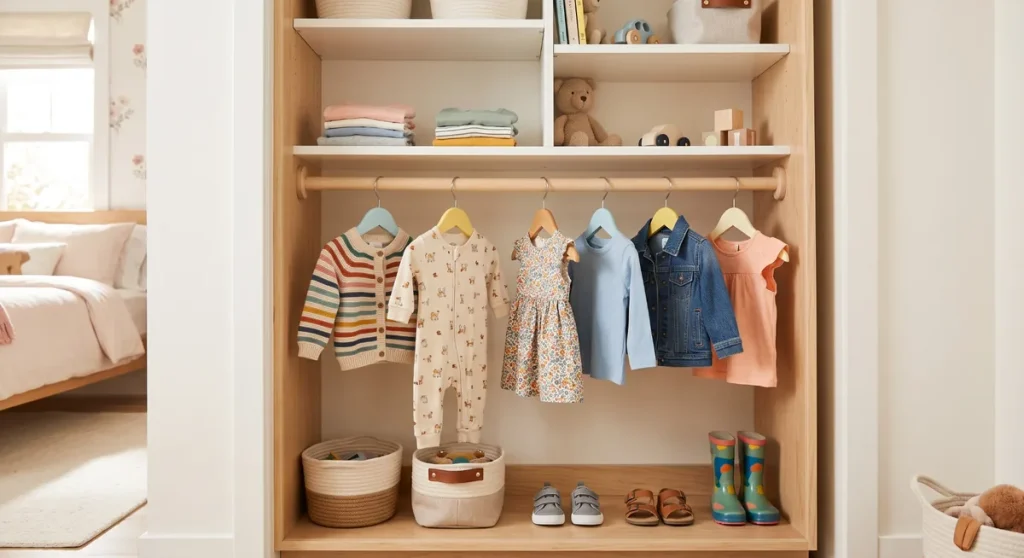
Have the child place and remove an empty hanger without standing on tiptoe or reaching overhead, and set the daily-use rod near that comfortable spot. Put rarely used storage above, and use adjustable standards or predrilled holes so the rod can move upward as the child grows.
For facilities designed primarily for children under accessibility rules, don’t use the broad household range above. The ADA standards include age-specific advisory reach ranges, and the applicable design requirements should be reviewed for that project.
How Far Below a Shelf Should the Closet Rod Sit?
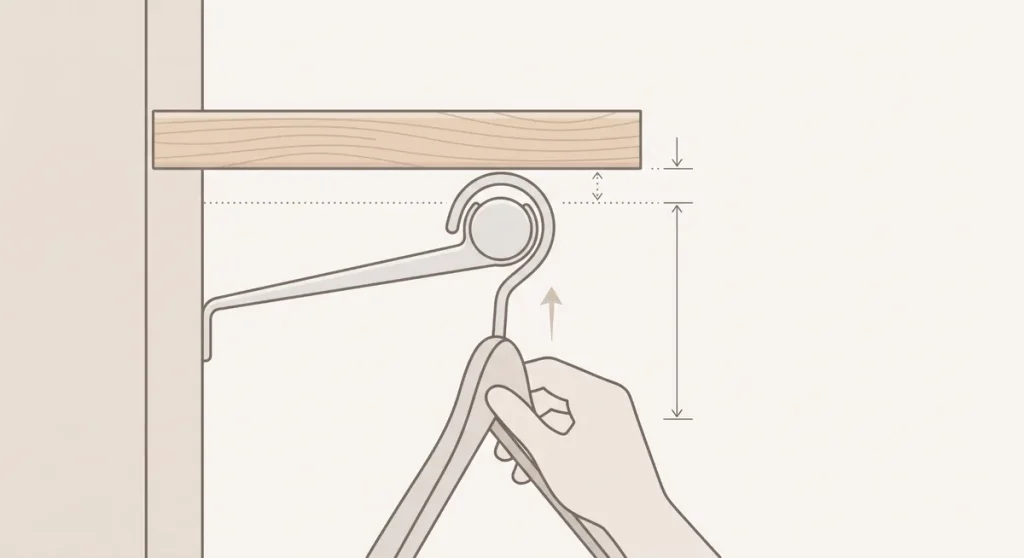
Leave at least 2 inches (5 cm) between the top of the rod and the underside of the shelf so a hanger hook can be lifted over the rod. This minimum appears in current guidance from Bob Vila and Angi.
Two inches is the minimum, not always the most comfortable gap. About 3 inches makes hand and hanger movement easier, particularly with thick wood hangers or a deep shelf edge. Our closet shelf depth guide covers which depths suit each storage type.
Convert Centerline Height Into Shelf Height
If the rod has a 1¼-inch diameter, its top sits ⅝ inch above the centerline. For a rod centered at 66 inches:
66 in. + ⅝ in. + 2 in. = 68⅝ in.
The shelf underside should therefore be at least about 68⅝ inches (174 cm) above the finished floor. Round up for easier hanger movement and the bracket system. Always check the manufacturer’s required relationship between the rod, shelf, and hardware.
How to Choose the Best Rod Height Before Drilling
1. Sort Clothes by Hanging Length
Separate short-hang items (shirts, folded pants) from long-hang ones (dresses, coats, robes, full-length pants). Estimate how much rod width each group needs. That split tells you whether to go single hang, double hang, or a combination.
2. Measure Garment Drop on the Actual Hanger
Use the hangers you’ll actually keep in the closet. Measure from the planned rod centerline down to the lowest hem, and base it on the longest ordinary item, not just an average shirt.
3. Test Reach for Every Regular User
Hold a removable rod, dowel, or tape mark at the proposed height. Everyone who will use the closet should be able to lift a hanger over it and remove clothing without a stool or strained overhead reach.
4. Check What Sits Above and Below
Add up shelf thickness, bracket drop, drawers, shoe racks, hampers, baseboards, and floor clearance. A rod height that works in an empty opening may fail once the rest of the system is installed.
5. Confirm the Centerline on Both Sides
Transfer the mark to both side panels or walls and check it with a level or laser. Don’t assume an existing shelf or ceiling is perfectly level.
6. Follow the Hardware Instructions
Rod diameter, cup position, allowable span, support spacing, fastener type, and load rating vary by system. Fasten into suitable framing or use manufacturer-approved hardware for the wall or panel material. Add intermediate supports wherever the instructions require them.
7. Dry-Fit and Load Gradually
Install the rod, confirm that hangers clear the wall, shelf, and door, then add clothing gradually while watching for movement or sag. Fix any support problems before loading the full wardrobe.
Common Closet Rod Height Mistakes
Measuring to an Undefined Part of the Rod
Marking 66 inches to the bracket screw, rod bottom, or shelf edge can shift the usable height. Define the centerline first and translate that line through the hardware dimensions.
Using Double Hang for Long Clothing
Two rods don’t create more useful capacity if upper garments cover the lower row. Reserve a single-hang bay for longer items.
Copying 40/80 Without Testing Reach
An 80-inch upper rod can be too high for shorter adults, older users, children, and many people with limited shoulder mobility. Storage density should never come at the cost of daily usability.
Forgetting the Shelf Gap
A shelf installed too close to the rod makes hanger hooks awkward to insert. Keep at least 2 inches from the rod’s top to the shelf underside, and provide more room when the hardware or hangers need it.
Treating Accessibility as a Single Height
Reach depends on the direction of approach, obstruction depth, clear floor space, and the person using the closet. A 48-inch label alone does not make the entire closet accessible.
Ignoring the Manufacturer’s Support Plan
The correct height cannot compensate for weak fasteners or an unsupported span. Use the rod and bracket manufacturer’s support spacing and load instructions rather than a generic rule.
The Best Setup for Most Closets
Start with 66 inches for a single adult rod or 40 and 80 inches for double hang, all measured to the centerline from the finished floor. Change those numbers only after checking garment drop, comfortable reach, shelf clearance, storage below, and hardware requirements.
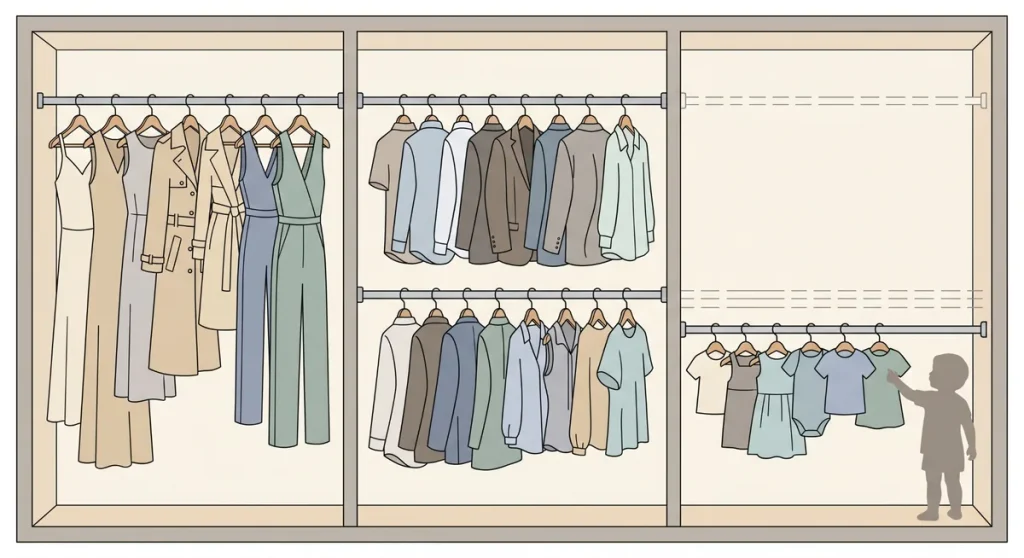
For mixed wardrobes, a combination layout usually wins: one single-hang bay for dresses and coats, one double-hang bay for shirts and folded pants, and a lower or adjustable bay for a child or anyone needing easier reach. That preserves capacity without forcing every garment and every person into one nominal “standard.” Those bays also assume the standard 24-inch closet depth so hangers clear the door.
Sources and Methodology
This guide draws on current U.S. search results and publicly available planning, installation, and accessibility guidance reviewed in September 2026. Common residential heights were compared across Taskrabbit, Angi, Bob Vila, and HomeGuide.
Accessibility statements were checked against the 2010 ADA Standards and the U.S. Access Board’s reach-range guidance.
The cited dimensions are planning starting points, not universal residential code requirements. The garment-drop and centerline methods are Home Size Lab’s editorial synthesis for fitting those starting points to a specific closet. Product instructions and local requirements take precedence.
Frequently Asked Questions
What is the standard closet rod height?
Start a single adult rod at 66 inches (168 cm) above the finished floor. Measure consistently to the rod centerline, then adjust for reach, the longest garment, and storage below.
How high should double closet rods be?
Place the lower rod at 40 inches (102 cm) and the upper rod at 80 inches (203 cm). Test both rows with the longest shirts or jackets, since a 40-inch gap can crowd longer garments.
What height should a coat closet rod be?
Start a coat closet rod at about 66 inches (168 cm). Full-length coats may call for 68 to 70 inches, but only if regular users can still reach the hangers and the shelf and door still clear.
How far should a closet rod be below a shelf?
Leave at least 2 inches (5 cm) from the top of the rod to the shelf underside. A 3-inch gap is easier with thick hangers, large hands, or a deep shelf edge, where the system allows it.
Is closet rod height measured to the top, bottom, or center?
Consumer guides don’t agree on one reference. For planning, use the rod centerline and record that choice. Then map the line through the actual bracket dimensions, and follow any different reference the manufacturer specifies.
What is a practical, accessible closet rod height?
For unobstructed adult reach, a fixed daily-use rod at or below 48 inches (122 cm) lines up with the ADA high-reach limit. Obstructions can lower what’s permitted, and the rules vary by project, so verify the full layout against local requirements.
How high should a child’s closet rod be?
A broad household starting range is 30 to 48 inches (76 to 122 cm), but test the actual child’s reach. They should place and remove a hanger without tiptoeing. Adjustable hardware wins out because reach and garment length change quickly.

4 Comments
Pingback: Reach-In Closet Dimensions: Depth, Width & Layout
Pingback: Standard Closet Depth: Minimum Size for Hanging Clothes
Pingback: Standard Closet Shelf Depth by Storage Type
Pingback: Coat Closet Dimensions: Depth, Width & Rod Height